Deny:
The third ‘D’ is to deny entry to the premises. At this layer, access control can be vital on CNI sites that contain critical assets within areas of sensitivity. While a traditional security approach may look to implementing mobile patrols or guards for a combination of deterrence, detection, and access control, when used in isolation this approach carries risks including the exploitation of blind spots and the threat of insider corruption.
Depending on the risk profile, an access control strategy can be as simple as combining a mobile patrol or guard with a secure automated entry gate, barrier, or turnstile for vehicles and pedestrians.
As the risk increases, this type of solution can scale to include credential-based access, managed by a PIN, QR, or smart-card system. Some high-risk sites like data centres, substations, and control rooms for emergency services, may implement a higher level of biometric security like facial recognition or fingerprint scanning. This ensures only authorised individuals can gain access to these often-restricted areas.
Delay:
The fourth stage within the layer is to delay any attempted intrusion. Delays often take the form of blockers or barriers that intend to slow down any attempted intrusions or attacks to provide time for a response. Considering the risks factors identified for CNI, this is where the adoption of vehicle security barriers can be used to stop, slow, or redirect hostile vehicles.
Barriers can be active, like retractable bollards and hinged gates, or passive in the form of concrete or stone barrier blocks, ditches, or planters. Vehicle barriers are subject to classifications from the ISO and the NPSA.
These benchmark the ability of a barrier to withstand and delay attacks. Traffic calming measures, like the installation of traffic islands or speed bumps, can further reduce the efficiency of vehicles as a weapon by reducing impact speeds and kinetic energy.
Defend:
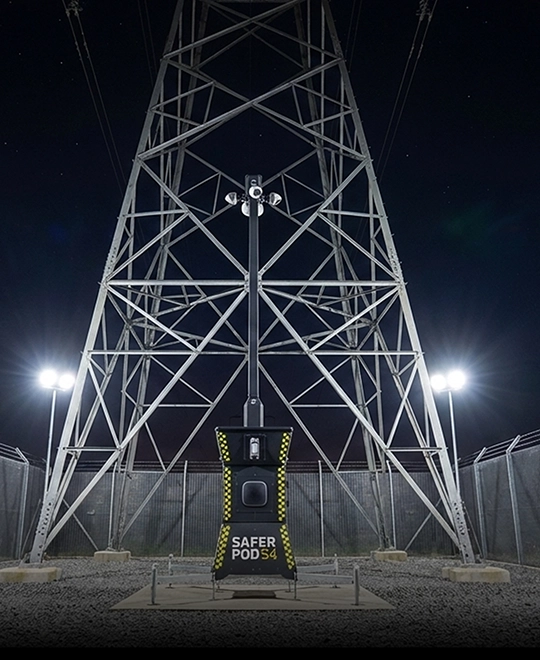
The final layer of security, this refers to the protocol followed that neutralises a threat once the perimeter has been breached. In the case of CNI, this is likely to refer to any monitored solutions, like fixed CCTV or perimeter intrusion detection technology.
PID devices, as with fixed CCTV, work effectively when monitored 24/7 to identify threats. At Safer Group, our control room provides continuous monitoring to ensure potential threats are assessed in real-time, identifying and prioritising critical incidents and escalating where appropriate. This escalation procedure will action a mobile response for smaller risks and a police response for high-risk incidents.
With compliant, comprehensive reporting, CNI organisations can also be provided with full situational awareness across the total range of projects they possess.