How to protect your vacant property from squatters

Philip Bunting

Chief Technical Officer
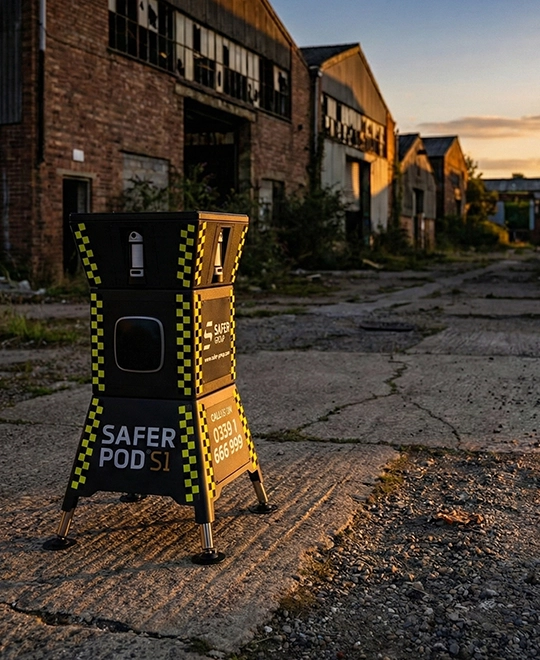
Exterior of a vacant property, covered in graffiti and surrounded by litter

The Safer summary

Squatters target properties that look empty, unsecured and unmanaged. The best way to prevent unlawful occupation of a vacant property is through a layered security strategy that combines physical barriers, visible deterrents, and rapid response.

Using technologies such as Safer POD® mobile CCTV towers, 24/7 monitoring, fencing, security screening, patrols and dog handling services, Safer Group helps property owners deter, detect, and disrupt intrusion attempts before squatters can gain a foothold. The goal isn't dealing with squatters after they have moved in. It is making sure they never choose your property in the first place.

Squatters can be one of the biggest risks faced by vacant property owners. Whether it's an empty office, a disused industrial building, a retail unit between tenants or a property awaiting redevelopment, an unoccupied building can quickly become a target if it appears unsecured or neglected.

Squatters may cause damage to the property, increase clean-up and repair costs, delay development plans, and create additional security challenges for owners and property managers.

The good news is that most squatting incidents can be prevented. In almost every case, squatters target buildings that look easy to access and unlikely to be monitored. Effective vacant property security is therefore about removing those opportunities before they arise. By combining physical security measures, visible deterrents, monitored surveillance and rapid response capabilities, property owners can significantly reduce the risk of unlawful occupation.
What wider risks can squatters cause?

Squatters can cause physical damage to a structure, strip assets like cable or wiring, and attract further criminal activity within communities. In cases of habitation causing poor sanitation and potential fire risks, human life can also be at risk through biological health hazards and arson.

Why do squatters target vacant properties and empty buildings?

Squatters rarely choose properties at random; they instead look for easy opportunities and signs that a building has been left unattended. Overgrown grounds, broken fencing, damaged windows, poor lighting, and a lack of visible activity can all suggest that nobody is actively managing or protecting the site.

Once a property develops a reputation as being vacant and accessible, it can attract repeated intrusion attempts. What begins as trespassing can quickly develop into a larger problem if nobody intervenes.

This is especially true for larger commercial sites where multiple access points make monitoring more difficult, and the cost of a potential intrusion is often more significant.

We experienced this when protecting British Airways Cranebank training facility, a large, decommissioned vacant site that faced ongoing trespass and intrusion incidents before a comprehensive security strategy was introduced.

Ongoing security challenges required a proactive approach, with the main objective of the project being to detect, deter and prevent any repeated intrusions. We achieved this by implementing our POD® S1, S4, and S7 systems in partnership with existing on-site guarding to act as a first-response layer.

What is a vacant or void property?

A vacant property, sometimes called a void property, is any unoccupied building.

This can include commercial premises between tenants, empty residential properties, former industrial facilities, care homes, schools or buildings awaiting sale, refurbishment, or redevelopment.

While vacant properties may not be in active use, they still require management and protection to prevent risks such as squatting, vandalism, theft, and damage.

Why preventing squatters is cheaper than removing them

As soon as a premises enters a vacant state, if not before, vacant property owners should seek an effective security solution to protect their asset. This is due to the difficulties associated with reactive action. In the wake of an incident, costs are likely to be mounting and evicting squatters can prove to be a time-consuming process.

Squatting can lead to property damage, associated repair costs, delays to development projects, and wider operational disruption. In many cases, the cost of recovering from an unlawful occupation is far greater than the cost of preventing it in the first place.

This is why vacant property security should be viewed as a preventative measure rather than a reactive one. The sooner vulnerabilities are identified and addressed, the lower the likelihood of a property becoming a target.

Need vacant property protection?

Let's secure what matters most.

How to protect your vacant property

The simplest way to stop squatters from taking hold of your vacant property is to stop them getting in. Having taken the steps to enlist a vacant property security specialist like Safer Group, both property owners and the security provider for the project would work together to make sure basic security measures are in place.

We would embark on this process by ensuring all access points are secure. This includes doors, windows, fire exits, roof access points, loading bays, and gates. Any weaknesses should be addressed as quickly as possible.

We would then look to implement a further layer of physical security. Measures taken here include the installation of perimeter fencing, steel security screens, reinforced doors, or controlled access points. These physical barriers alone cannot guarantee a property will never be targeted, but they provide an essential layer of protection with a strong deterrent effect.

At Sir Gabriel Woods Mariners Home, a Grade 1 listed property, we opted for an initial physical security layer to protect the vacant former care home using a combination of perimeter fencing, controlled access measures, and steel security screening to reduce the risk of unauthorised entry. This project ultimately reported zero successful intrusion events, owing largely to the immediate physical deterrents that protected the full 96m of the perimeter.

Related

One of the most effective ways to prevent squatting is to make it obvious that the property is protected and monitored. This is commonly achieved with the introduction of a visible detection-based security solution. Squatters are far less likely to target a building if they believe they will be seen, challenged, or removed. Visible security measures help reinforce that.

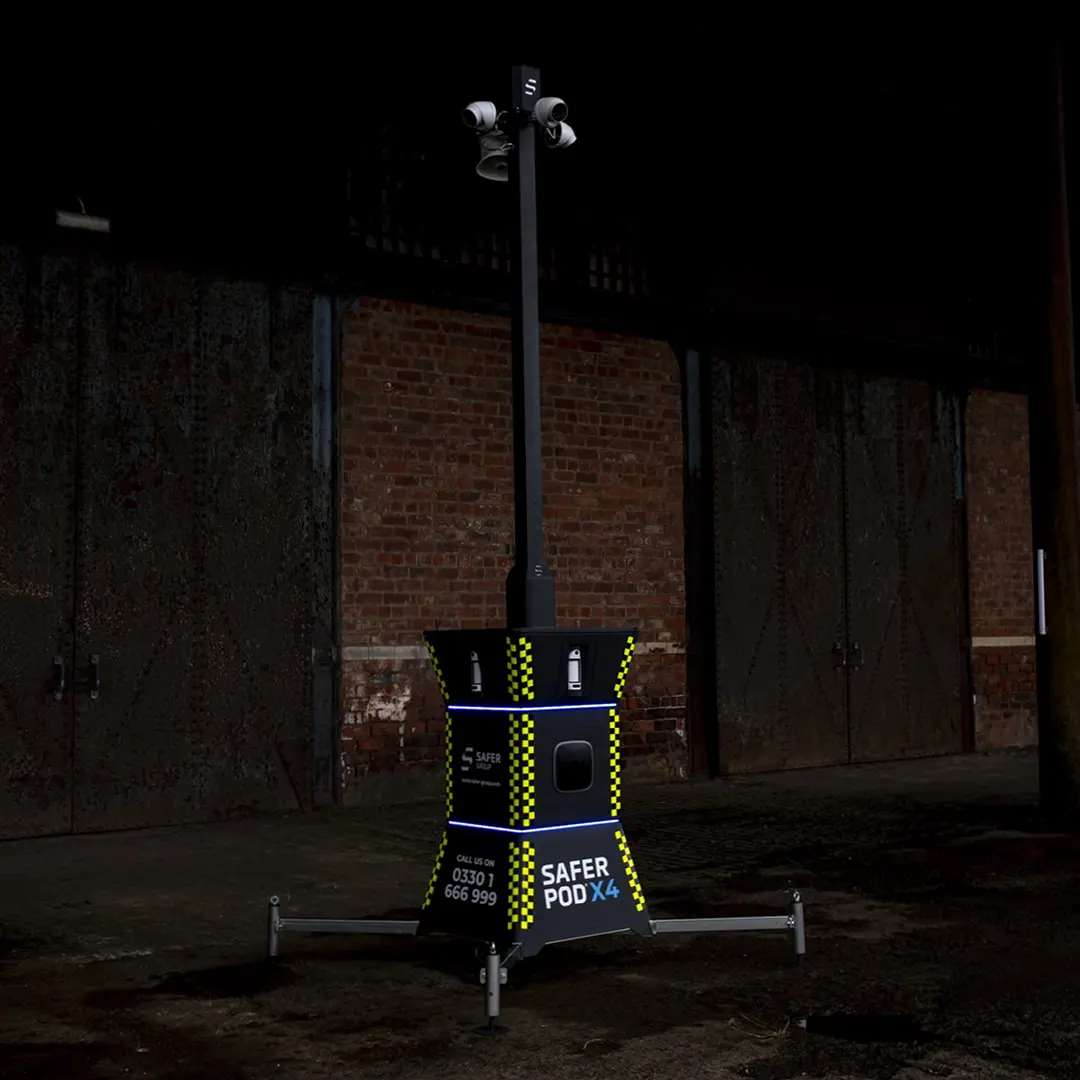
Our Safer POD® solutions can, and have, played a significant role in deterring intrusion attempts on notable vacant sites and properties. Unlike traditional fixed CCTV systems that can be difficult to spot when mounted at height, mobile CCTV towers like our POD® S4/X4 or POD® S7 can sit at ground level, creating a visual deterrent that immediately captures the attention of the individual.

The presence of a vacant property security solution like this demonstrates that a property is under constant surveillance, with both suspicious activity at the perimeter and any further unauthorised access far more likely to be detected as a result. For vacant properties, that visibility alone can be enough to discourage intrusion attempts and further risks.

Safer POD® S4/X4

Award-winning perimeter protection with active thermal detection, ideal for medium-to-large projects.

  • Bi-spectrum active thermal detection up to 100m
  • 50m infra-red night vision
  • Methanol fuel for zero emissions aside from heat and water
  • Pulsing illumination signalling active watch and alerts (X4 only)
Safer POD® S4/X4

Squatting incidents often begin with an initial visit. An individual accesses the site, checks whether the property is occupied and assesses how likely they are to be challenged. If they can freely explore without any notice, they may return and attempt to establish an occupation.

This is why early detection is so important. Our Safer POD® solutions are monitored 24/7/365 from our own internal physical security operations centre (pSOC), with our control room verifying suspicious activity as it happens. This gives both the property owners and security teams an opportunity to issue a rapid response before a trespass incident can escalate into a squatting issue. The earlier an incident is identified, the easier it is to deal with.

When protecting the complex Sir Gabriel Woods Mariners Home, we utilised mobile CCTV towers within a layered security solution to monitor suspicious activity at the perimeter of the building. Our Safer POD® solutions identified risks as they approached the boundary, triggering a response protocol that began with an instant alarm verification to our pSOC.

Across the project, these solutions were essential to providing proactive visual deterrence and capturing suspicious activity, while also filtering unnecessary alarm responses. We ultimately reported zero instances of intrusion or false alarms, while also maintaining uninterrupted utility services to residents.

Safer Pod X4 security pod outside a dark warehouse

Security solutions for squatter prevention

There is no single solution that can prevent every squatting attempt. The most effective vacant property security solution uses multiple layers of protection that work together.

A strong, layered approach may include Jersey barriers, temporary Heras fencing, steel screens, Safer POD® mobile CCTV towers or perimeter intrusion detection devices, remote monitoring, security patrols, and dog handlers.

Each layer serves a unique purpose. Physical security makes entry difficult, visible deterrents make the property less attractive, monitoring identifies suspicious behaviour, and response teams provide intervention when required.

This layered approach has been adopted by Safer Group successfully across various high-risk vacant projects. At Tata Steel's Port Talbot facility, our layered solution was integrated with existing security operations on site as part of a wider protection strategy. The Safer Group vacant deployment at Port Talbot was award-winning, ensuring no losses had occurred in areas protected by our systems while multiple successful interventions deterred all intrusion attempts.

At Sir Gabriel Woods Mariners Home, it was the combination of fencing, Safer POD® mobile CCTV towers, fixed CCTV, steel security screening, and monitoring technologies were within a layered solution that ultimately secured the vacant property, resulting in zero attempted intrusions and a fully compliant process involving regular inspections.

The most successful vacant property protection strategies do not rely on one solution to combat squatting. They combine several to minimise opportunities and maximise protection.

What are signs that squatters are targeting your property?

Early warning signs that squatters may be targeting your property include repeated trespassing, unauthorised individuals on site, attempted forced entry through doors, windows, or gates, damaged locks, broken windows, graffiti, littering, and evidence of human habitation like makeshift shelters or personal belongings. These early warning signs shouldn’t be ignored as they may lead to repeated visits or attempts to assess viability for squatting.

What laws are in place to combat squatters and illegal occupants?

Laws relating to squatting and unlawful occupation differ across the UK.

In England and Wales, squatting in a residential property is a criminal offence under Section 144 of the Legal Aid, Sentencing and Punishment of Offenders Act 2012. Squatting in a commercial property is deemed a civil matter dealt with through civil possession proceedings.

Scottish legislation dates to the Trespass (Scotland) Act 1865, with entering and lodging on private property both residential and commercial without consent being a criminal offence. Moreover, no adverse possession is offered to squatters after a period of 10 or 12 years, unlike England and Wales.

In Northern Ireland, squatting is governed by a separate legal framework and there is no equivalent criminal offence matching Section 144 or the Trespass (Scotland) Act 1865 for residential or commercial squatting.

Commercial property owners across the UK will often need to rely on civil legal remedies to recover occupied premises, making proactive vacant property security and prevention measures particularly important. Property owners should seek legal advice relevant to the location of their property if squatting occurs.

Preventing squatters starts with taking security seriously

Squatters are usually looking for opportunities to settle, not challenging environments.

Properties that appear abandoned, poorly secured, or rarely visited are naturally more attractive than those that are clearly protected and actively managed.

The best way to protect your vacant property from squatters is to remove opportunities that encourage unlawful occupation. Secure access points, visible deterrents, monitored surveillance, and rapid response capabilities all help make a property less appealing to potential occupiers.

Effective vacant property protection is about showing that a building may be empty, but it is not abandoned. A property that looks protected is far less likely to become a target for squatters.

Need vacant property protection?

Let's secure what matters most.

Book a site visit

Step 1
Step 2
Step 3
Step 4
Step 5

What sector are you in?