Solar Farm Security: How to Protect Against Theft, Vandalism and Risk

Philip Bunting

Chief Technical Officer

The Safer summary

Solar farm security is essential yet complex, with evolving risk factors like cable theft and intrusion. It requires a layered approach which considers the rural, isolated nature of sites which often lack power and communication infrastructure.

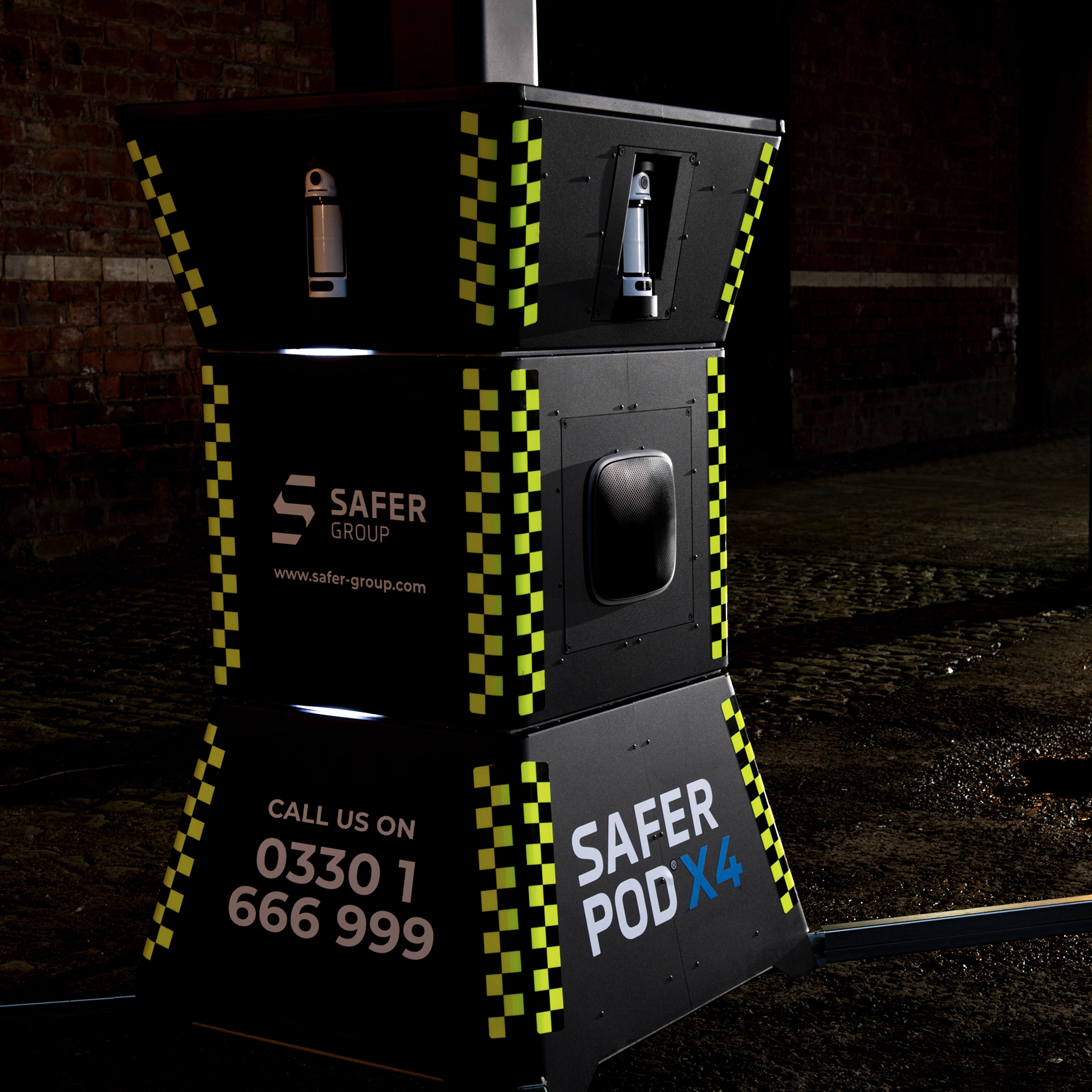
A strategy that combines physical perimeter security with actively monitored detection solutions like fixed CCTV or the Safer POD® S4/X4 intruder detection system, is ideal to deter and detect risks while maintaining insurer compliance and minimising the financial and reputational risk of downtime.

The state of solar farm security

As the UK pivots towards a net-zero future, solar farms have become increasingly important to our national infrastructure. The UK has over 1,300 operational solar farms with almost 3,000 more in some stage of planning or construction.

Solar power’s contribution to UK energy supplies is increasing, with 2025 seeing a peak of 6.3% contribution to the whole grid. This aligns with solar farm installations, which hit record breaking numbers in 2025, as the role of solar as a power generating technology gains popularity globally.

However, the rapid expansion of solar power has brought an unintended consequence: surging crime. Reports cite the theft of both solar panels and high value copper cabling. In one incident, 550 stolen panels worth over £100,000 were stolen in Worcestershire while another saw thieves steal 30km of cabling valued at approximately £100,000 from a site in Wiltshire. Commercial string inverters (rated at 100kW) are also targets for theft, or damaged during incidents.

A politically contentious subject, solar farms have been labelled ‘environmental vandalism’ in some rural communities. This animosity carries a risk of producing actual vandalism, intrusion, or disruption on site with disgruntled protestors even engaging in physical attacks on renewable projects. Such attacks have been found throughout Europe and should not be ruled out within the expanding UK network.

The risks are clear, and the need for a robust security solution to protect solar farm infrastructure has never been greater.
Why do solar farms require security?

Typically, solar farms are found in geographically isolated locations. This rural nature creates significant security challenges like inattention, lack of surveillance, and a slow emergency response.

In addition, the infrastructure of a solar farm is tricky to defend. With a standard 5-megawatt (MW) farm covering 25 acres, they require a large area of land to maximise financial return and productivity. This footprint limits the capability of most traditional security measures, which would be remarkably expensive and inefficient to implement on this scale.

Solar farms have a unique, complex risk profile. Theft, vandalism, intrusion, and anti-social behaviour (ASB) can cause severe damage to solar farm infrastructure.

Valuable raw materials, such as copper cabling, are typically the primary target of theft. High commodity prices for cabling, like the £100,000 for 30km worth stolen in Wiltshire cited earlier, make stripping miles of cable very lucrative to groups engaging in organised crime.

Construction phases may also result in limited storage for materials like solar panels and cabling, alongside plant material. Left unmonitored for extended periods, this insecurity can raise the risk of theft and intrusion while also making it easier for criminals to steal larger quantities of items with little risk of detection.

Solar farms can also face risk due to civil unrest and protest. Community groups have engaged in protests to deter the construction of solar farms in rural areas. As tensions rise, the risk of vandalism, trespass and unauthorised site occupation must be considered within any security plan.

With an extensive footprint resulting in a vast perimeter, environmental hazards can also pose a significant risk to the integrity of solar farm sites. Extreme weather, human intruders, or neighbouring wildlife can create damage in fence lines before infiltrating sites, with the potential for further damage to equipment thereafter.

Related

What is the cost of not securing your solar farm?

Failure to secure your solar farm introduces major risks. Failure to secure the site can have a ripple effect that carries significant impact to both your financial investment and organisational reputation.

A single incident has the potential to take an entire site offline. As cabling is the essential component that allows a solar farm to connect to the grid, a site with no capacity to provide power will not be able to generate income.

A theft incident or damage to this infrastructure will also require extensive repair work, with the cost of downtime, materials, and labour likely to be incredibly high.

Repeated insurance claims can increase volatility, increase the cost of premiums or create policy exclusions. Escalation may occur if a site is particularly prone to theft or damage. This may result in insurers deciding to fully withdraw cover, depleting the value of the solar farm site.

The insurance risk of poor security

While rarely publicised at the level of individual projects, insurers often require a site to have appropriate security conditions in place with full agreement over terms to ensure cover. If a site is not sufficiently protected, insurers can deny claims. Investor confidence can be damaged heavily as a result, which creates financial issues and reputational damage that can spread to future or concurrent projects.

How should I secure my solar farm?

To protect a solar farm, a layered approach is essential. Effective security starts at the perimeter and works inward. This ensures thieves, vandals and intruders are subject to visible deterrence, detection, and delay, at every stage. From physical barriers through to our Safer POD® family, fixed CCTV and 24/7 monitoring, the strongest security approach is coordinated and cohesive across multiple levels.

Perimeter fencing and access control

The first line of defence is to protect the perimeter. A secure fence line, reinforced with metal mesh, produces a visible deterrent barrier preventing access. When implemented on larger projects, this can also allow for the implementation of reinforced secure access points for additional security.

Owing to the sheer scale of reported thefts and the size and weight of the materials concerned, erecting a measure to control vehicle access to the solar farm site may also be advisable. Concrete barrier blocks, which can weigh as much as 4-6 tonnes, can re-enforce against such threats.

Beyond the outer layer, a perimeter intrusion detection system (PID) is an ideal choice to both deter and detect any unauthorised or suspicious activity on site before it can escalate into theft or ASB.

PIDs, like those found in the Safer POD® family, work by immediately detecting an intrusion attempt on the solar farm. Their physical, robust presence is a visual deterrent to any intrusion attempt. If required, an audio intervention can scare the intruder off premises, and an escalation phase occurs.

Solar farm crime relies on the criminal believing they have the luxury of time in a remote, isolated location. The Safer POD® solution eliminates this by alerting as soon as they are detected attempting unauthorised entry to the premises, not once an incident occurs. This level of active intervention can make all the difference.

Related

The Safer POD® S4/X4 solution

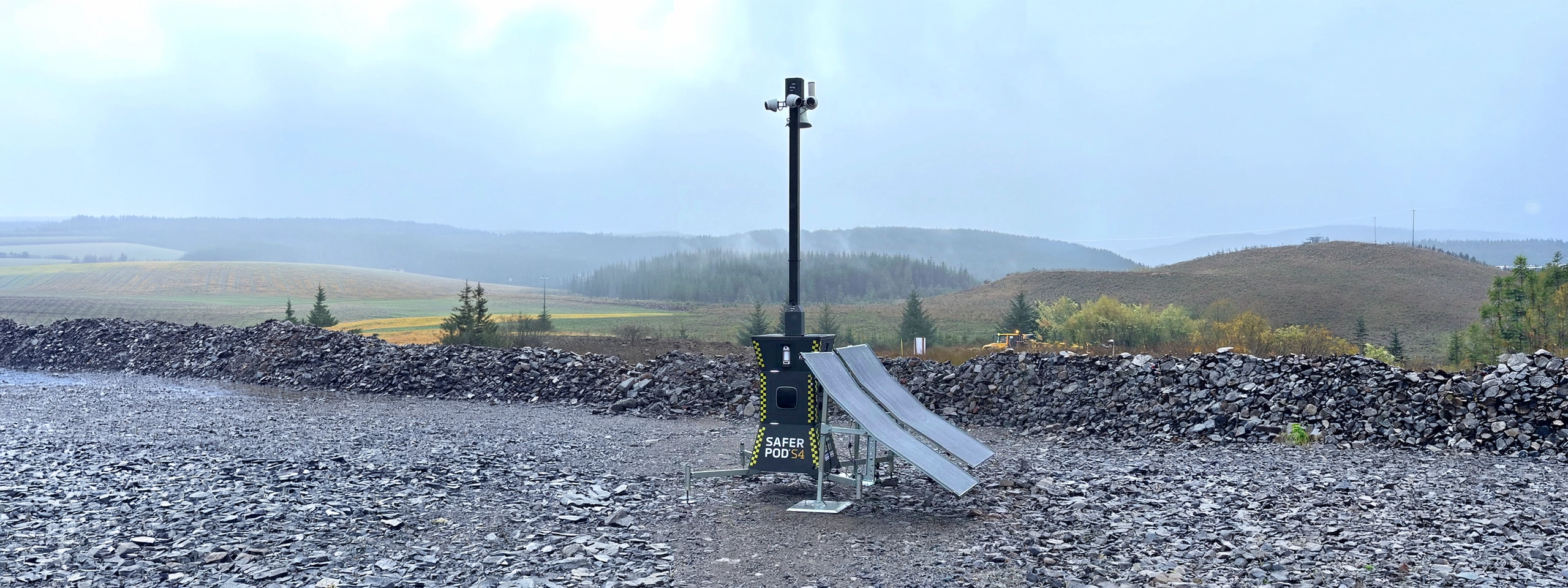
The Safer POD® S4/X4 is a PID system designed to combat the security threats found on solar farms. Offering autonomous bi-spectrum active thermal detection up to 100m, and 50m infra-red night vision, the Safer POD® S4/X4 performs best when deployed on large, environmentally complex sites.

The modular design of the Safer POD® S4/X4 enables rapid deployed nationwide to the challenging rural locations that house solar farm sites.

Large solar farm developments in the UK are also subject to a mandatory environmental impact assessment under regulations set by the government in 2017 to evaluate the ecological, landscape, and agricultural impact of large developments.

Typical detection systems deployed in rural locations may be powered by a fuel generator due to limited power availability. This can be costly, while greenhouse gasses emitted cause air pollution and contribute to climate change.

The Safer POD® S4/X4 is a compliant and efficient solution, powered by dual solar panels (580w total output). This is backed up for uninterrupted operation by both battery and a methanol fuel cell which produces no emissions aside from heat and water.

The remote nature of rural solar farms can also lead to poor mobile or internet connectivity, which can limit the effectiveness of communications. To address this, the Safer POD® S4/X4 comes with dual 4G/5G un-steered roaming SIMs which automatically connect to the strongest signal, while optional StarLink satellite communications can be introduced within the toughest remote locations.

Bespoke configuration also allows the Safer POD® S4/X4 to be configured to the specific demands of your solar farm. For full risk mitigation, flood and fire detection can be introduced. Furthermore, an optional automatic number plate recognition (ANPR) can be deployed to create enhanced surveillance at the perimeter. Further camera configurations include a pan, tilt, and zoom (PTZ) setup with advanced analytics.

Fixed CCTV

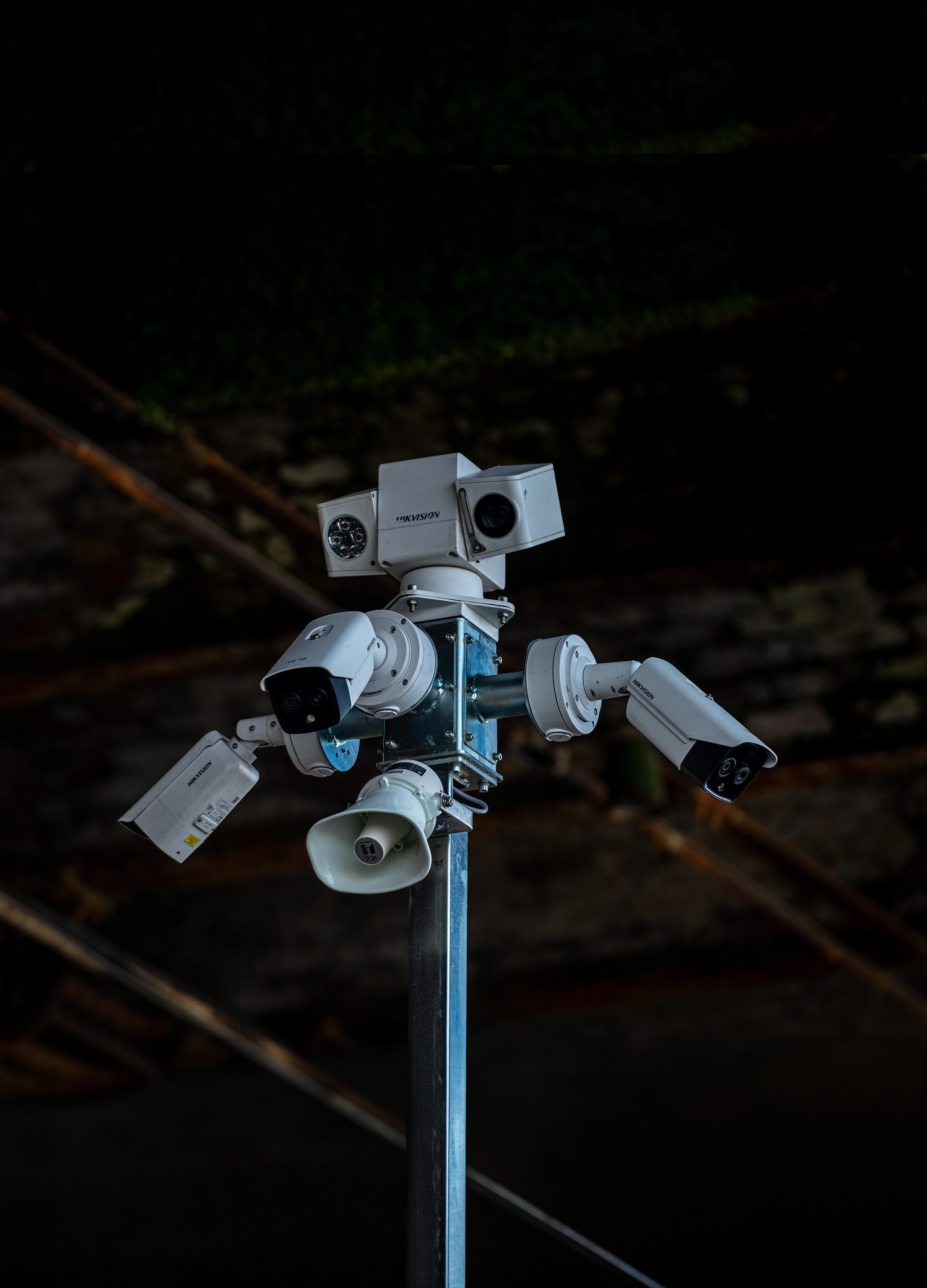
Fixed CCTV is a further option for those looking to protect a solar farm. A permanent solution, best installed at the perimeter of the site when power and communications are available, fixed CCTV can provide richer detail with 4k imaging and optional live AI analytics packages for enhanced detection. Capable of capturing up to 200m night vision depending on site conditions, a bespoke fixed CCTV setup is ideal for protection on sizeable solar farm projects.

Fixed CCTV

Best for detection and deterrence at the perimeter. With 4k image quality resulting in richer detail, our bespoke fixed CCTV packages offer enhanced monitoring.

  • High quality 4k images
  • Rapidly deployable visual deterrence
  • Mains, battery, or hybrid power options
  • Advanced neural processors and AI analytics
Fixed CCTV

Active monitoring

To get the most from any Safer POD® solution or fixed CCTV setup, active monitoring is essential. A control room will utilise trained security personnel to review footage captured in real time.

Upon the detection of an intrusion attempt or suspicious activity on site, the control room will issue an audio challenge to deter intruders while also contacting the keyholder for the site and the police if escalation is required. A detailed incident report is provided soon after, to ensure all parties are aware of the circumstances in which the alarm was raised. This report has further value as proof of security compliance to insurers.

The in-house Safer Group monitoring team are equipped to review your site from our control room 24/7, 365 for an immediate response and escalation to any alerted threats. While peace of mind is guaranteed, live footage is also instantly accessible via both desktop and mobile apps wherever or whenever you wish to view them.

Securing our solar infrastructure

Regardless of development stage, whether under construction or already integrated into the national infrastructure, your solar farm will face a unique set of risks. Rising organised crime is targeting copper cable and solar panels, coupled with the persistent threat of ASB and intrusion.

Selecting a robust security solution is essential. With a multi-stage strategy in place, starting at the physical perimeter and layering in actively monitored detection technology like the Safer POD® S4/X4 or a fixed CCTV system, you can manage this risk and keep crime at bay.

With this risk managed effectively, the long-term value of your solar farm is preserved. The ability to contribute to our renewable future remains constant, with insurer compliance maintained and costly downtime avoided.

Need Site Protection?

Let's secure what matters most.

Book a site visit

Step 1
Step 2
Step 3
Step 4
Step 5

What sector are you in?