Summer Construction Site Security Guide: Theft, Vandalism, and Intrusion.

Discover methods to secure your construction site during the busy summer season, identifying risks, tips, and both traditional and innovative security solutions.

Marise White

Commercial Manager

The Safer summary

Summer seasonal fluctuations create opportunities for criminals to exploit. Generally considered the busiest period for construction activity, the summer brings longer daylight hours and increased subcontractor footfall. Intrusion, theft, anti-social behaviour, and safety concerns are all at risk of escalation.

These are addressed by reassessing security arrangements, from traditional physical measures to the introduction of modern monitored fixed CCTV and Safer POD® perimeter intrusion detection devices.

Why is summer important for construction site security?

Seasonal security risks affect projects at the extremes. Between winter storms and summer sunshine, seasons can influence how sites operate, how people act on them, and the opportunities criminals can identify to exploit vulnerabilities.

The summer season is the busiest period of the year for the construction industry. As daylight hours get longer and weather conditions improve, the season becomes a focal point for increased progress on projects.

Within this increase in activity, risk does not disappear, it diversifies. For site managers and principal contractors, awareness of the new kinds of threat is an essential step to protecting the safety and security of the building site. The following article offers tips to protect against common summer safety and security risks.

What security risks arise on sites during the summer?

The construction site environment poses risk at all times of the year. Allianz Cornhill estimates an £800 million annual cost to the industry, driven by theft, vandalism, and arson. These are the core risks faced on any construction project, regardless of the season. With industry stats collected annually, it becomes difficult to judge any seasonal fluctuations.

However, summer notably creates conditions that raise risks. For instance, longer daylight hours might improve the natural visibility and oversight over your project, but the window for crime is also extended.

Longer opening hours can create increased activity around access points and on projects. Deliveries, vehicular access, and a greater variety of subcontractors accessing the site will all require additional vigilance in identifying suspicious behaviours and individuals.

Related

While there is a belief that criminals thrive in the darkness, increased footfall due to later lighter evenings with better weather can create a greater threat of opportunistic theft and anti-social behaviour. This can be further exacerbated by the presence of valuable tools, materials and equipment left unattended on the premises.

Irregular site schedules and seasonal holidays can also increase risk. An unattended site with a perceived lack of oversight could be quickly targeted by an opportunist looking to commit intrusion, theft, or anti-social behaviour.

A further sense of instability and uncertainty, driven by a lack of communication between the keyholder on a project and the security provider, may further create vulnerabilities on these sites.

What safety concerns grow during the summer?

Beyond intrusion, theft, and anti-social behaviour concerns, an awareness of the safety risks posed to those who may intrude on the premises should be established.

With more children and young people out due to school holidays and the longer, brighter evenings, there is a greater risk of intrusion on sites, which goes from being a concern at weekends to being present every evening.

A curious youngster often does not see risk, instead behaving without malicious intent. Nonetheless, an incident like this can have profound consequences.

What is the legal liability for intrusions?

Under the Occupiers Liability Act 1984 and the Health and Safety at Work Act 1974, site occupiers have a duty of care to intruders, with a higher standard of care expected where children are concerned. HSE guidance elevates this from an insurance concern to a legally binding responsibility for those in control of the site.

Further safety concerns can be identified in the fire risk that increases during periods of summer weather. Prolonged dry spells and higher temperatures create the ideal environmental conditions for fire to both start and spread rapidly. Construction sites subject to hot works that also carry flammable materials, electrical equipment and fuel storage areas can all suffer elevated risk during periods of extreme hot weather.

The Health and Safety Executive further states that employers should be aware of summer heat stress and assess risks where possible. A duty of care to provide drinking water and plan work to reduce time spent in bright sunlight is also outlined.

A sensible approach from a site manager would be to enforce the use of the right PPE for the summer months, adjust working hours to suit colder times of the day, and raise awareness of warning signs through daily briefings and supervisor training.

How are summer construction risks addressed?

With the identified risks in mind, principal contractors and site managers must reappraise their security arrangements to ensure they are fully covered against the biggest summer risk factors.

The foundation of an effective site security strategy, traditional methods of physically reinforcing the perimeter, such as fencing, signage, and controlled access points, are all encouraged to deter easy intrusion and establish a clear boundary for the project.

Ensuring mandatory signage is displayed can further strengthen the safety of a project through the summer months. Some mandatory signs are enforced by law and identified during a routine site security risk assessment. Signage relevant to specific PPE requirements could be tailored to account for the elevated risk factors.

As a site evolves, these measures must be reviewed regularly to ensure adequate protection is in place. Ideally, this would take place on the eve of the summer season to identify any new vulnerabilities.

While not employed on all sites, physical reinforcement can also include the presence of a mobile patrol targeting high-risk windows during evenings, and a full-time officer present throughout the project, situated at a common access point or potential intrusion area. Proportionate to the size of a project, this approach is less relied on with more modern alternatives to deterrence and detection.

A monitored CCTV solution is just one of the modern methods by which a site can reinforce its perimeter. Fixed CCTV, for instance, can capture and alert of any incidents taking place before a swift response procedure is actioned to remove the threat from the site.

CCTV may require alteration with the arrival of better weather throughout the summer season. As layouts shift and daylight hours extend, recalibration to eliminate any blind spots and maintain a clear image quality may be necessary. Motion alerting that may have been reliable in the past could also need to be configured again.

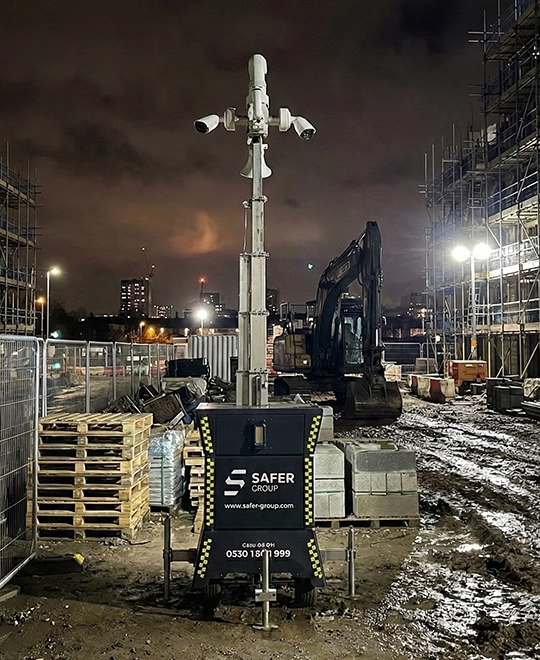
Moreover, perimeter intrusion detection (PID) devices, often referred to as CCTV towers, can offer a stronger deterrent presence in addition to 24/7 monitoring and incident capture. PID devices work by continuously scanning an area for threats.

If an intrusion incident is identified at the perimeter of the site, the device will alarm to deter any further criminal activity within the vital areas of the compound, while a mobile response is actioned to attend the site. This all contributes to a layered, scalable security solution.

Safer Group offer PID solutions specifically designed for typical summer site security challenges. The Safer POD® range of integrated security solutions offers full risk mitigation against security breaches, fire, and flooding.

Rapidly deployable thanks to a modular construction, the Safer POD family of solutions are a temporary site security measure tried and tested on projects across the UK, both remote and urban.

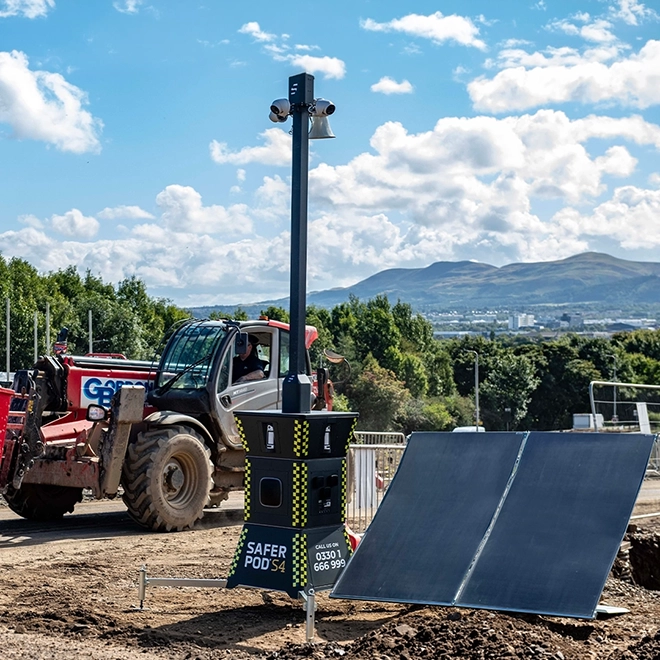
Suitable for smaller projects, the Safer POD® S1/X1 offers a compact solution with 360-degree detection to visually verify threats. The Safer POD® S4/X4 solution is better suited to medium-to-large projects, offering award-winning perimeter protection equipped with active thermal detection and a 50m infra-red night vision camera configuration.

Safer POD® S4/X4

Award-winning perimeter protection with active thermal detection, ideal for medium-to-large projects.

  • Bi-spectrum active thermal detection up to 100m
  • 50m infra-red night vision
  • Methanol fuel for zero emissions aside from heat and water
  • Pulsing illumination signalling active watch and alerts (X4 only).

A key feature ideal for the summer months within these devices is their solar power capacity. Solar, harnessing the power of the sun, will allow these devices to operate fully autonomously with service all year-round, creating zero emissions or noise pollution. Both the Safer POD® S1/X1 and the Safer POD® S4/X4 come with solar as standard, with the Safer POD® S4/X4 utilising 2x 290-watt panels.

Adapting to summer’s elevated risk factors does not have to be a complicated process. An appraisal of the security measures in place, ideally during the completion of the latest site security risk assessment, will allow principal contractors and site managers to identify the solutions necessary to best protect their projects.

Need site protection?

Let's secure what matters most

Book a site visit

Step 1
Step 2
Step 3
Step 4
Step 5

What sector are you in?